Trauma

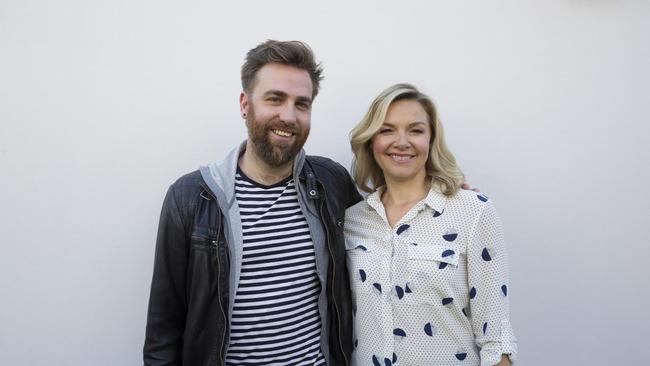
Peter Cameron and the Alfred team return to DevelopingEM to discuss trauma care during the plenary sessions for #DevEM2022. This year they are partnered with an amazing team from Royal Darwin led by Jamie Moran.

PETER CAMERON
JAMIE MORAN

Peter is the Academic Director of The Alfred Emergency and Trauma Centre and Professor of Emergency and Professor of Emergency Medicine at Monash University’s School of Public Health and Preventive Medicine (SPHPM) and Jamie is an emergency medicine specialist and pre-hospital care doctor who has been working in the NT for the last 3 years at Royal Darwin and Palmerston Regional Hospitals and with Careflight Top End. Together they are hosting a diverse group to discuss cutting edge trauma care.

This session will have slightly longer presentations and panel discussion sessions to allow for more audience interaction.

CHRIS GROOMBRIDGE from the Alfred will be discussing how maintain Trauma skills and prevent skill fade.
VICTORIA BRAZIL from the Gold Coast University Hospital will be presenting how to use simulation to maintain high performance trauma teamwork.
BART CURRIE from the Royal Darwin will be describing marine trauma in the Northern Territory.
MARIANNE TIEMENSMA, the chief forensic pathologist for the Northern Territory will be outlining the outcomes of trauma in this jurisdiction.

A truly world class faculty discussing all aspects of trauma care.

Join Peter, Jamie and their team at DevelopingEM 2022 Darwin for a truly world class session on trauma care.

Adult EM and Critical Care

Brian Wright and the Stonybrook team return to DevelopingEM to kick off the plenary sessions for #DevEM2022. This year they are partnered with an amazing team from Royal Darwin led by Aruna Shivam.

Brian is an emergency and critical care physician from Long Island, NY and Aruna is an emergency and retrieval physician from Darwin and together they have brought together an amazing diverse group of critical care clinicians for session one of DevelopingEM 2022.

Chidi Nwakanma from U Penn will be reviewing one of our fave topics- how to bridge the gap in critical care in the transition from ED to ICU.
David Wallace from Pittsburgh will be describing his two and a half years as a COVID Intensivist.
Lindsay Reardon from Vermont will be bringing her unique POCUS skills back to the tropics.
Bo Remenyi joins us from Darwin as a Paediatric Cardiologist to discuss Congenital Heart Disease and Cardiogenic Shock in the Tropics.
Ben Wyler from Manhattan will be teaching us how to prepare for the next pandemic.
Michelle Taylor from Darwin will be describing how to be the best leader possible within the pressured environment of the ICU.
Florian Pracher from Darwin will be drawing on his local experiences to describe how to Survive Sepsis in the Tropical PreHospital Environment

And James Hooper from Darwin gives an anaesthetic perspective on advanced emergency airway management.

This will be a truly amazing start to DevelopingEM 2022.

Join Aruna, Brian and us in Darwin this September for the best critical care education this year!!

Toxicology Workshop at DevelopingEM 2022

In 2016 the Toxicology and Poisons Network Australasia (TAPNA) group undertook an excellent emergency toxicology workshop in Sri Lanka.

TAPNA are repeating the performance this year during our Darwin event with the “Tox at the Top End” workshop

The workshop will cover

  • Risk Assessment and Decontamination
  • Cardiotoxic Poisoning
  • The ECG in Poisoning
  • Agrochemical Poisoning
  • Envenomation
  • Case Discussions

Run by the expert team of

  • Natalie Thurtle
  • Michael Downes
  • Naren Gunja
  • Satish Mitter

and

  • Dushan Jayaweera

this is sure to be an excellent learning experience for all emergency and critical care practitioners.

At $300 AUD for a whole day workshop it’s also a bargain!

Nursing Workshop

Once again the amazing Professor Kate Curtis will be performing an Emergency Nursing Workshop during DevelopingEM 2022 Darwin.

Kate is an RN at Wollongong ED, Professor of Emergency and Trauma Nursing at the University of Sydney, Director of Emergency Research, Illawarra Shoalhaven Local Health District and honorary Professorial fellow at the George Institute for Global Health.

Kate’s translational research program focuses on improving the way we deliver care and has attracted $10 million funding.

Kate has mentored more than 50 clinicians in research projects and was the 2019 Australian nurse of the year.

The first half of the nursing workshop focusses on the HIRAID emergency nursing assessment framework with the afternoon having a more practical skill based format.

HIRAID is the only evidence based  emergency nursing assessment framework in the world, which is known to improve emergency nursing clinical assessment and communication.

Read about what HIRAID is, and the significant impact it can have on patient and health service outcomes here. Or, watch this short video.

The second half of the day will focus on useful practical methods to get a practical or research project up and running in your own department.

Just bring your idea along to the workshop and leave with a clear plan (or you could just work on how to implement HIRAID in your ED).

This workshop will help you do this by walking you through the process of how to get started, refining your processes, designing the implementation for maximum success and sustainability, and how to measure the impact of your project.

Kate has organised numerous in department projects, published extensively as a result, and so is in a unique position to mentor delegates interested in producing practice changing projects and research.

This workshop is scheduled for September 27, 2022 and is free for interested nursing delegates. Numbers are strictly limited to 28 so sign up now to make sure you reserve yourself a place with Kate and her team.

We look forward to seeing you at DevelopingEM 2022.

Illawarra Shoalhaven behind DevelopingEM

The Illawarra Shoalhaven Local Health District (ISLHD) is situated just south of Sydney in New South Wales, Australia and provides health services for the residents of the Illawarra Shoalhaven region – around 400,000 people.

This region includes the Wollongong, Kiama, Shellharbour and Shoalhaven Local Government Areas.

ISLHD operates eight hospital sites and provide community health services from approximately 58 locations across the region.

Since 2017 ISLHD has officially supported the efforts of DevelopingEM and this year we have multiple faculty members from our home base supporting our efforts.

The Core Ultrasound workshop will have three faculty members from ISLHD

  • Angelo Abeywickreme
  • Ruchit Agrawal
  • Marcus Coelho

Our Nursing workshop will once again be coordinated by

  • Kate Curtis
  • Matt White

Our focus this year on the challenges and opportunities of delivery of healthcare for First Nations peoples will be assisted by a local cultural lead group

  • Sharon Bloxsome
  • Paul McCleod
  • Ryan Dashwood

supported by

  • Andrew Bezzina
  • Nathan Trist
  • Mark Newcombe

So ISLHD staff will be supporting this conference right across the program.

DevelopingEM is hugely thankful to ISLHD for making this beautiful region our home base and supporting us in the production of our last 3 conferences.

Global Emergency Medicine Strengthening in St Lucia

DevelopingEM is a great conference, but it is just a conference, 5 days of education.

The real benefit from our events comes from people meeting people and cooking up schemes that provide lasting benefit.

Some examples include recurrent paediatric, ultrasound and trauma workshops across the Caribbean, increased connectivity between regional clinicians with mentors and educators in Australia and the USA, and ongoing mentoring of prehospital practitioners in Sri Lanka and Fiji.

The island nation of St Lucia in the Caribbean has become a bit of a poster child for this lasting benefit from a short conference.

Since the amazing Lisa Charles first presented on the development of emergency medicine in her home country St Lucia during our conference in 2013 there has been a stream of interactions partially fostered by meetings at DevelopingEM events.

The most recent of these is the work of Joachim Unger and his organisation Global EMS in bringing an EMS Train the Trainer course to St Lucia.

Jo Unger is a consultant anaesthetist and EMS Medical Director of the Berlin Fire Department.

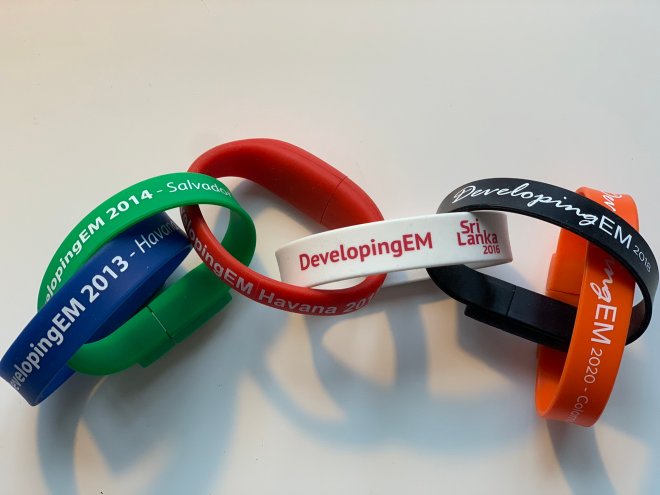
He’s also our most devoted DevelopingEM international fan having been to all six of our international conferences. He even collects the wrist bands.

So how did an anaesthetist from Berlin end up collaborating with emergency physicians from Stonybrook in Long Island to provide a sustainable EMS training program in St Lucia.

Well it was a long process.

Jo had been involved in the Caribbean for a number of years.

Between 2009 and 2011 he worked in Guadeloupe at the Centre Hospitalier Universitaire, Pointe-A-Pitre both supervising and performing anaesthesia.

He attended DevelopingEM 2013 in Havana, Cuba where he met Lisa Charles from St Lucia.

In 2014 he came onto our faculty for DevelopingEM 2014 Brazil, in Salvador Da Bahia, being an integral part of the Trauma track as well as facilitating a De-escalation workshop during the conference.

In 2016 and 2017 he performed a Quality performance assessment in the Emergency Department of Victoria Hospital in St Lucia utilising an evidence based assessment tool of his own design.

In 2018 and 2020 he met and forged ties with an enthusiastic group of new emergency physicians from Stonybrook Health in Long Island at DevelopingEM Fiji and Colombia.

With this team he returned to St Lucia in 2021 to conduct a comprehensive EMS train the trainer course for first responders in St Lucia.

And so from brief conferences long standing connections and international collaboration have flourished.

We hope that this example inspires you to connect with like minded colleagues at DevelopingEM 2022 Darwin.

The conference will have a virtual capacity but in truth we hope that many of you will consider attending in person and expanding your international connections.

Perhaps there will even be long lasting friendships and collaboration that are again fostered providing benefit for remote and First Nations communities in this amazing part of the world.

You can register for the event here and we hope to see you in Darwin in September!

Core Ultrasound Workshop for DevelopingEM 2022

Since 2013 the team from Ultrasound Podcast have produced and managed amazing Ultrasound Workshops for DevelopingEM.

The workshops are based on the material produced by Matt, Mike, Jacob and Terren over the years for their Ultrasound Leadership Academy.

The approach is to provide excellent “pre-reading” (around 20 hours of topic based POCUS educational videos are part of the package sent to all workshop attendees) and maximal time on probe under direct expert instruction during the workshop.

This year Terren leads an international team of experts providing another amazing POCUS workshop experience during DevelopingEM 2022 in Darwin.

Jacob and Terren have consolidated the excellence of Ultrasound Podcast into their own venture- CORE ULTRASOUND– and they continue to model their workshops on the incredible Castlefest concept.

In 2022 they will be assisted by local experts including Nadi Pandithage a POCUS enthusiast based in the host city Darwin, and Angelo Abeywickreme from NSW. This will be Angelo’s 4th time assisting us with Ultrasound.

This workshop always sells out fast and registration will be open soon so get in quick!!

Core Ultrasound Workshop SEP 26 and 27, 2022 during DevelopingEM 2022 Darwin.

Jacob Avila showing just how far the Ultrasound Faculty will go to provide the best POCUS training experience.

Reintroducing DevelopingEM

On March 11, 2020 the World Health Organisation (WHO) officially announced a global pandemic that has changed our lives forever. It was also the last day of our Colombian event, DevelopingEM 2020, and in fact the WHO announcement was during a very pertinent presentation on COVID19 by Dr Ben Wyler. As we all headed home to periods of quarantine and busy workplaces the future of conferences and DevelopingEM was uncertain. The subsequent 18 months has seen enormous changes for all of us.

Lockdowns have given us plenty of time to think about the future of DevelopingEM and we believe there remains a place for a mostly live and interactive conference focussing on the development of emergency medicine. People meeting people has been the core benefit of our events and so many long standing and productive relationships have occurred as a result of DevelopingEMers meeting one another.

Next week we are formally announcing our plans for next year, DevelopingEM 2022 Darwin, and ahead of the announcement we wanted to reintroduce DevelopingEM as an organisation.

DevelopingEM is a little venture Sanj Fernando, Lee Fineberg and myself started about 10 years ago and DevelopingEM 2022 will be our eighth event.

DevelopingEM Ltd is a not for profit venture with a unique financial model.

On average greater than 90 percent of our funding comes from the registration fees of attendees from privileged situations, often where there is individual access to substantial study leave funding.

This funding not only pays for the organisational aspects of each event but, with careful budgeting, it allows funding to be directed towards subsidising the attendance of clinicians from host nations and regions.

The absence of a requirement for medical industry funding gives us organisational independence and there is no influence from industry bodies on our ethos and direction.

We aim to hold a regular regional conference in a situation where emergency medicine is rapidly evolving.

The educational approach is centred on the provision of excellent clinical information aimed at the senior clinician allowing all attendees to take home clinical pearls to their next clinical shift.

The core conference has tracks focussing on Adult Emergency Medicine and Critical Care, Paediatric Emergency Medicine and Trauma Care.

These core tracks are teamed with sessions focussing on the development of emergency medicine globally as well as sessions determined by the host partners.

Over the years we have had a number of enthusiastic partner organisations.

Illawarra Shoalhaven Local Health District (ISLHD) provides us with non clinical time to focus upon DevelopingEM.

Alfred Health is our event management team.

The Alfred Emergency and Trauma Centre from Melbourne runs our trauma track, Stonybrook Health from New York organises the Adult Emergency Medicine track and McMaster Sick Kids in Ontario our Paediatric track.

We have a range of workshop providers depending on the needs and requests of our regional partners.

DevelopingEM 2022 will be our eighth event with previous events in Sydney, Cuba (twice), Brazil, Sri Lanka, Fiji and Colombia.

Over that time we have sponsored the attendance of over 600 regional clinicians who, depending on the setting, have paid anything from zero to ten percent of the registration fees of an international delegate.

The last 3 conferences have seen this delegate support become a much more organised venture with local and regional delegates not only mostly funded from a registration point of view but also receiving accommodation and travel assistance.
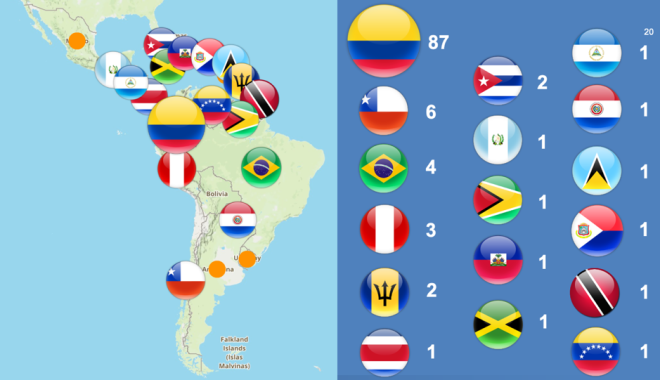
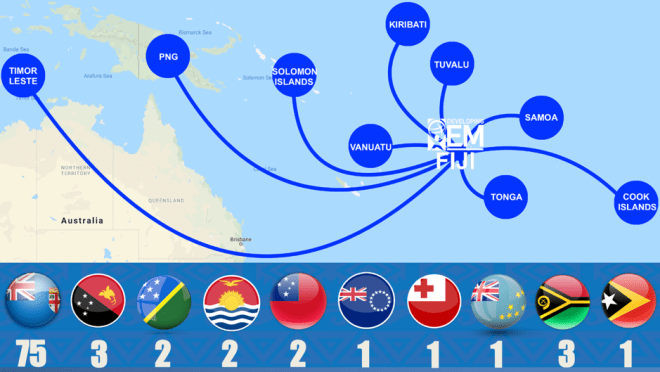
We remain very proud of this aspect of DevelopingEM.

One of the other achievements, which was less anticipated, were the longer-term effects of a broad range of clinicians coming together.

The opportunity that the events have provided for like-minded people to meet has resulted in lasting relationships that have resulted in long standing benefits across the regions where the conferences have been held.

Some examples include recurrent paediatric, ultrasound and trauma workshops across the Caribbean, increased connectivity between regional clinicians with mentors and educators in Australia and the USA, and ongoing mentoring of prehospital practitioners in Sri Lanka.

The benefits have certainly not been unidirectional, and we have been taught much by our regional colleagues.

Perhaps the most acute lesson is just how lucky we are here in Australia.

We in Australia are monumentally privileged in global terms to have the health care systems and working conditions that we enjoy.

Despite having a luxurious health care system, the explanation of the benefits of different systems from around the globe demonstrates that we also have much to learn about how to maximise the benefit of an emergency medicine system.

We have learnt how the Cuban system achieves the same health outcomes as Australia at one eighth of the cost.

We have seen how developing an emergency system from the ground up in Sri Lanka allows that system to focus on patients with actual emergencies.

Just because we have it good doesn’t mean we cant learn to be better, to be efficient and to be more focussed.

We have also been taught what it is actually like being an emergency clinician in a different system.

Emergency clinicians from around the globe have explained how they battle illness in working conditions we can barely fathom, with enthusiasm and without complaint.

These experiential presentations have been a core of our conferences and it has been an absolute privilege to learn from wonderful clinicians from around the world.

One of our Brazilian colleagues, Daniel Schubert, related recently what a 12 hour shift in an ED in Rio looks like.

Dan described the following patient selection from a recent shift and I think most clinicians in Australasia would struggle to rack up similar patients in years of practice.

In one average shift Dan treated patients with

  • Miliary Tuberculosis
  • a Type A Aortic Dissection
  • a Traumatic and Expanding Neck Haematoma
  • High Cervical Fractures and Neurogenic Shock
  • Cardiac Arrest
  • Severe Closed Head Injury- GCS 5
  • Hepatic Encephalopathy (also COVID positive)
  • Gunshot wounds (3 patients)

All this with the hospital supply of Ketamine exhausted and N95 masks in such short supply that staff were personally decontaminating their masks to reuse on subsequent shifts.

Similarly Carla Rey Navarro from Chile related how she was part of teams created during the pandemic to move intubated patients in Ebola style iso chambers, six at a time, in the back of a Hercules aircraft. This effort was to reduce the strain on the intensive care units in Santiago as the initial waves of the pandemic battered the capital.

She has also had to manage paramedics being injured whilst trying to care for patients in the middle of street protests, as well as organising the fire related evacuation of a 400 bed Santiago hospital . All this is the middle of a pandemic which has resulted in an enormous impact upon Chile.

Connecting with and learning from intelligent, dedicated colleagues like Daniel and Carla has been one of the amazing personal highlights of DevelopingEM.

So what’s next for DevelopingEM, a conference where the face to face dynamic is core?

Well COVID 19 has meant some changes for us.

In 2022 we were looking to combine with the African Federation for Emergency Medicine (AFEM) and conduct back to back conferences in Ghana, where there are rapidly evolving emergency medicine systems.

Both organisations remained excited about a joint venture but mid-way through 2020 it became clear that that even by late 2022 a live conference in Africa had no chance of happening.

It was a difficult realisation as we had been trying to get our event to the continent for a number of years.

We haven’t abandoned the idea and at this stage both AFEM and DEM are going to look at the possibilities for an African event in 2024.

So what to do instead?

Well for many years we had discussed the idea of a conference in Australia perhaps with a focus on First Nations Healthcare, and with COVID changing the face to face conference experience an event in Australasia now seemed a feasible and valuable option.

National and Local partners agreed and we look forward to them contributing hugely to the event.

There are differences and similarities between international developing emergency medicine situations and the Rural, Remote and First Nations critical care that are present within the Northern Territorian context.

So even though this will be a local conference we think that DevelopingEM 2022 Darwin easily fits within the aims and objectives of our organisation.

We hope during the conference to have a major focus on the challenges and opportunities of First Nations Critical Care and negotiations to work out how to appropriately integrate this topic into the platform are ongoing.

Lee, Sanj, I and the entire team are really excited about the possibilities DevelopingEM 2022 Darwin will hopefully bring.

We are also very enthused at the prospect of seeing you, our DevelopingEM family, again.

Stay tuned for our formal announcement next week and if you would like to be included on our mailing list to get regular updates as we move forward, please let us know.

12 months of COVID 19 with Ben Wyler

Almost exactly 12 months ago we started our COVID19 VLOG series by chatting with Ben Wyler.

Ben is an emergency physician with an interest in travel medicine based in Manhattan.

Ben had subbed in at the last minute to our DevEM2020 program in Colombia with a presentation on COVID19.

During the presentation the WHO formally declared a Global Pandemic and the whole world changed.

Ben returned to New York as the first wave was breaking and in May last year we caught up with him to see how things were in the Big Apple.

Today we get an update from Ben from a very different perspective, one where nearly 50% of New Yorkers have been vaccinated against COVID19.

The success of the vaccination rollout in the USA may give us an idea of the what the future looks like.

Its great to catch up with Ben again who is after a year just beginning to see some “normality” return to his life.

Check out the interview here.

During the interview we discussed some of the novel treatments for COVID19 infection.

The Australian National Covid 19 Clinical Evidence Taskforce has an expert synthesis of the evidence base for the current range of treatments for this illness.

We also discussed approaches to post vaccination symptoms particularly related to headache and CVST. There has been an excellent discussion of this phenomenon by the St Emlyn’s Blog and they include some guidelines from RCEM as part of the discussion.