St. Lucia to host first Paediatric Intensive Care Basic Course

Lisa Charles
Medical Director – Victoria Hospital

The goodwill from St. Lucia’s participation in the Developing EM Conference in Cuba continues to flow our way. This month through the hard work of Dr. Elena Cavazzoni – Paediatric Intensivist; Children’s Hospital at West mead, Australia, whom we met in Cuba and Dr. Bruce Lister – Lead Instructor; Paediatric Intensivist and Anaesthesiologist; Director of Training, Department of paediatric Critical Care Medicine, Mater Children’s Hospital , Queensland, Australia, St. Lucia will host its first ever Paediatric Intensive Care Basic Course!

We have thirty local nurses and doctors signed up for this fully sponsored course. Just over eight paediatric intensivists from as far away as New Zealand, Australia, Canada and the US and as close as Barbados will run the two day workshop – May 20th and 21st.

What is even more exciting is that our colleagues from the University of the West Indies in Barbados under the guidance of Dr. Michele Lashley together with Paeds Basic will run a train the trainer workshop so that we build capacity locally to continue training on our own.

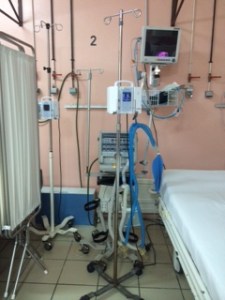
photo (3)St. Lucia has a three bed ICU with the most basic equipment. The provision of ICU care to Paediatric patients is a challenge with the current equipment and absence of intensivists. This course is certainly a step in the right direction to elevating our ability to safely approach the initial management of critically ill paediatric patients.

We will send lots of pics and updates your way after the course.

Also update on our new portable sonosite from Matt and Mike of Ultrasound podcast is being put to great use in our ICU – the head nurse assures me that “it is being used all the time…great things are happening!”


The “march of folly” in Brazilian Emergency Medicine

Original article in Portuguese – see below 

By Frederick Arnaud

President of the Brazilian Association of ABRAMEDE – Emergency Medicine

A letter to the medical institutions of Brazil, including the Ministry of Health, the CFM (Federal Medicine Council), AMB (Brazilian Medical Association), CNRM (National Commission of Medical Residency) and everyone who works emergency services.

In 1984, Barbara W.Tuchman gave the world the book “The March of Folly,” which, in addition to being amazing, is admirably well written. It is a book to be read and reread, dedicated to those who are interested in the ways of humanity and who seek explanations for the mindless adoption of government policies that contrary to their own interests.

The author offers four episodes in world history as examples of symbolic moments: 1.The Trojans and their mysterious wooden horse inside the walls of Troy. 2. The inability of the Renaissance Popes to capture the importance of reformist voices and not prevent Protestant division. 3. The arrogance of the English lords that led to the process of North American liberation. 4. The American quagmire in Vietnam.

How do we understand that with policy-making power, some act so frequently in a manner contrary to reason and to the interests at stake? Why do the mental processes of these intelligent people too often seem not to work? The conclusion is offered to the reader that the main cause of folly is the ambition of power.

The lust for power is defined by Tacitus as being the “most flagrant of all the passions.” It is satisfied only when exercising power over other human beings. Governing ends up being the best way to exert power over people. But what does this have to do with Emergency Medicine in Brazil? After reflecting on the struggle for the recognition of Emergency Medicine in Brazil, I ask myself why is this recognition so difficult to attain? Why, despite all the evidence presented, technical, scientific, financial and social, our institutions insist on ignoring this issue or when they do, act so slowly and indecisively.

Numerous discussions have occurred throughout Brazil and always with the same conclusions: Emergency Medicine as a specialty is important to Brazilian medicine. The discussion is so repetitive, it’s getting boring and bland. Are they trying to overcome tiredness? As the saying goes: Why is it that more than sixty countries around the world have already taken this initiative, including the nations that lead the world in technological advancement, such as the United States, England, Australia, New Zealand , France and others, while we are still so reluctant? These countries have already demonstrated extremely positive results with such policies. It was clear that there was a substantial improvement in emergency services with benefits for the whole health system. The mortality rates of acute diseases declined, and the ethical and legal proceedings against professionals reduced significantly. The health system, doctors, and especially   patients who were provided services in skilled and humane way all benefitted. The costs were reduced, while making these services more effective and efficient. Poor practices became a rare occurrence. The new professionals, developed through the concept of the emergency physician, perform all procedures necessary for maintaining life safely and correctly. The specialization contributed to the prevention and treatment of diseases. It was the only way for the professional to get established in the field and work as more than just a “freelancer.”

It contributed to the alleviation of overcrowding, since the emergency physician has more success and hospitalizes patients only when necessary, in addition to requesting tests correctly when appropriate. In countries where Emergency Medicine is a specialty, the professional is respected and paid well, unlike our current situation where working conditions are inhumane and wages are demeaning. The professional is humiliated, abused and doesn’t stay very long in the profession. The chaos in emergencies continues, while having meetings and more meetings, discussions and more discussions. The emergency continues with little prospect of change. Would in not be, ladies and gentlemen, our institutional FOLLY to continue to discuss the issue without actually doing anything?

Returning to the book “The March of Folly,” did anyone suspect that huge horse? How many Christians denounced indulgences without doing anything? No matter how much counsel they received, the Americans still entered Vietnam, and we all saw the result.  Well friends, the conclusion is that a similar process in happening in Brazilian medicine today, despite all the talk, all the forums, and all the evidence. Reactionary forces with threats to their power continue to prevent what is already more than clear to most professionals. People who do not work in an emergency or know the emergency and mostly do not live the emergency continue to prevent it from becoming established. Who cares about this chaos? The cause of the foolishness, once again, is the lust for power, both financial and social.

The saddest thing is that this nonsense is transformed into deaths every day at thousands of emergency services sites across the country. This foolishness is transformed into poor treatment, humiliation and prejudice toward professionals who are dedicated to their jobs. The folly will lead to the extermination of an ideal that is legitimate, true and necessary to our health system and our population. It is encouraging to know that we will not rest and will continue to defend this idea, which can initiate the process of transforming our emergencies and place them at the level of importance they deserve. We will not allow our minds to command the folly and we will always march in order to do what is best for the patient: the beginning, middle and end of our profession. So I urge our institutions that seek to provide answers to Brazilian physicians, in the most brief and emphatic manner possible: Why is Emergency Medicine not yet a specialty in this country? To conclude, we will repeat the phrase coined by John Kennedy: “The problems of the world cannot possibly be solved by skeptics or cynics whose horizons are limited by the obvious realities. We need men who can dream of things that never were.”

I, physician, work in medical emergency 36 hours a week in shifts and 24 hours a day as a manager.


A marcha da insensatez  NA MEDICINA DE EMERGÊNCIA BRASILEIRA

Carta endereçada as Instituições Médicas deste País: CFM, AMB, CNRM, Ministério da Saúde e a todos que trabalham nos serviços de emergência do Brasil

No ano de 1984, Barbara W.Tuchman premiou o mundo com o livro “A marcha da insensatez” que, além de surpreendente, é admiravelmente bem escrito. Obra para ser lida e relida, dedicada aos que se interessam pelos caminhos da humanidade e procuram explicações para a insensata adoção, por muitos governantes, de políticas contrárias aos seus próprios interesses.
A autora oferece quatro episódios da história mundial como exemplo de momentos muito emblemáticos: (1) Os troianos puxam o misterioso cavalo de madeira para dentro dos muros de Tróia; (2) Os Papas da Renascença não captam a importância das vozes reformistas e não impedem a cisão protestante; (3) A arrogância dos lordes ingleses detona o processo de libertação da América do Norte; (4) Os americanos se atolam no Vietnã.
Como entender que, com poder de decisão política, alguns ajam, tão frequentemente, de forma contrária àquela apontada pela razão e pelos próprios interesses em jogo? Por que o processo mental dessas inteligências, também, tão frequentemente, parece não funcionar? A conclusão final oferecida ao leitor é que a principal causa da insensatez é a ambição do poder.
A ambição do poder é definida por Tácito como sendo a “mais flagrante de todas as paixões”. Ela só se satisfaz quando exerce o poder sobre os demais seres humanos. Governar acaba sendo a melhor forma de exercer o poder sobre as pessoas.
Mas o que isso tem a ver com a Medicina de Emergência no BRASIL? Após refletir sobre a luta para o reconhecimento da Medicina de Emergência no Brasil, passo a me perguntar por que está sendo tão difícil esse reconhecimento? Por que, apesar de todas as evidências apresentadas, técnicas, científicas, sociais e financeiras, as nossas instituições insistem em ignorar esse problema ou quando o fazem, atuam de forma lenta e discreta.
Inúmeros debates já ocorreram em todo o Brasil e sempre com as mesmas conclusões: Medicina de Emergência como especialidade é importante para a medicina  brasileira. A discussão, de tão repetitiva, já está ficando enfadonha e sem graça. Será que estão querendo vencer no cansaço? Como diz o dito popular: Por que será que mais de 60 países no mundo já tomaram essa iniciativa, entre elas as nações que comandam o conhecimento e a tecnologia mundial, como Estados Unidos, Inglaterra, Austrália, Nova Zelândia, França e outros enquanto nós ainda relutamos tanto? Estes países já apresentaram seus dados extremamente positivos com tal ação. Ficou claro que houve uma melhora substancial nos serviços de emergência, com benefícios para todo o sistema de saúde. A mortalidade de doenças agudas diminuiu; os processos éticos e jurídicos contra os profissionais reduziram de forma importante. Ganharam o médico, o sistema de saúde e, principalmente, o doente que passou a ser atendido de forma qualificada e humanizada. Os custos nos serviços foram equilibrados tornando estes mais eficazes e econômicos. A má prática passou a ser fato raro. Os novos profissionais, formados através do conceito do médico emergencista, realizam todos os procedimentos necessários à manutenção da vida de forma segura e correta. A especialização contribuiu para a prevenção e tratamento das doenças. Foi a única forma de o profissional se estabelecer no serviço e não utilizar o plantão apenas como um “bico” . Contribuiu para a diminuição da superlotação, já que o médico emergencista dá mais altas com segurança e interna apenas o necessário, além de solicitar exames de forma correta, ou seja, com indicação adequada. Nos países onde a Medicina de Emergência é uma especialidade, o profissional é bem conceituado e bem remunerado, diferente de nossa situação atual onde as condições de trabalho são desumanas e os salários são aviltantes. O profissional é humilhado, maltratado e dificilmente permanece muito tempo no setor. O caos nas emergências continua, enquanto fazemos reuniões e mais reuniões, discussões e mais discussões.  A emergência continua com poucas perspectivas de mudanças. Não seria, senhores, uma INSENSATEZ de nossas instituições, permanecer discutindo o tema, sem efetivamente nada transformar? Voltando ao livro “A marcha da insensatez”, será que ninguém desconfiava daquele cavalo enorme? Quantos cristãos denunciaram as indulgências e ninguém fez nada?  Por mais que aconselhassem os americanos, eles entraram no Vietnam e todos viram o resultado. Pois, amigos, chegamos à conclusão que processo semelhante acontece hoje na medicina brasileira, apesar de todas as discussões, de todos os fóruns, de todas as evidências.  Forças reacionárias, ameaçadas no seu poder, conseguem barrar o que já está mais que claro para a maioria dos profissionais. Pessoas que não trabalham na emergência, não conhecem a emergência e principalmente não vivem a emergência conseguem impedir sua estruturação. A quem interessa esse caos? A causa  da insensatez, mais uma vez, é a paixão pelo poder, seja ele social ou financeiro. O mais triste é que essa insensatez é transformada em mortes todos os dias nos milhares serviços de emergência de todo o país. Essa insensatez é transformada  em maus tratos, humilhações e preconceitos aos profissionais que se dedicam a esta área. A insensatez levará ao extermínio de um ideal que é legítimo, verdadeiro e necessário ao nosso sistema de saúde e à nossa população. De alento serve saber que não descansaremos e continuaremos a defender esta ideia, única que pode dar início ao processo de transformação de nossas emergências e colocá-las no patamar de importância que elas merecem. Não deixaremos que a insensatez comande nossas mentes e marcharemos sempre com o propósito de fazer o que é melhor para o paciente: começo, meio e fim de nossa profissão. Por isso conclamo as nossas instituições que busquem oferecer respostas aos médicos brasileiros, de forma mais breve e enfática. Porque Medicina de Emergência ainda não é uma especialidade neste País? Para concluir, repetiremos a frase cunhada por John Kennedy: “Os problemas do mundo não podem ser resolvidos por céticos ou por cínicos, cujos horizontes se limitam as realidades evidentes. Temos a necessidade de homens capazes de imaginar o que nunca existiu”.


Eu, médico, trabalho na emergência 36horas por semana como plantonista e 24h diárias como gestor.


Frederico Arnaud

Presidente da ABRAMEDE- Associação Brasileira de Medicina de Emergência

http://www.abramede.com.br
ABRAMEDE-logo


Ultrasound Podcast joins DevelopingEM Brazil – 2 Day Workshop

Limited places available for this unmatched Ultrasound Workshop experience at an unbeatable price!

Ultrasound Podcast Sambafest 13th-14th September 2014

Due to the overwhelming positive feedback from the ultrasound workshops at previous conferences, we have added a two day post conference workshop to the end of the Brazil conference this year.

Presented in person by Drs Mike Mallin and Matt Dawson from the popular and innovative Ultrasound Podcastit is sure to be an event not to be missed. Limited spaces available!

As always, we’ll focus mainly on the hands-on approach to capture the ultrasound experience.


To book, register for the conference today, and select the Ultrasound Workshop during the registration process. If you have already registered for the conference, log in to add the workshop to your registration. The cost of the workshop is USD $595.

You get all the lecture material ahead of time in very easy to consume video format that can be played on your computer, tablet, or smartphone. You watch this material as many times as you like while traveling, while working out, while doing the dishes, or wherever you’re able to learn. The day of course we will have a very short review of the main points from the lecture. Then we scan!

This allows the team more time to assist you with actual hands on ultrasound skills, and gives you more time to enjoy Salvador de Bahia.

Here are the topics that will be covered each day. You’ll receive this material to view in the month preceding the actual conference.


Schedule

Day 1

Benefits / Introduction / Physics / Knobology
Trauma
Basic Cardiac
Vascular access
Aorta
RUSH

Day 2

Appendix
Soft Tissue
DVT
GB
Pelvic
Renal


Building global relationships with DevelopingEM

By Mark Newcombe- Co Director of DevelopingEM

As a co-director of DevelopingEM I have had a pretty realistic impression of what our little organisation is likely to achieve.

Lee and I hope, within the framework of a quality conference experience, to promote interactions between clinicians around the globe with the aspiration that these connections made will result in ongoing and long lasting benefit in the regions DevelopingEM visits.

These are fairly lofty aims which I must admit don’t always fit with my very realistic assessment of my own capabilities.

I was immensely proud of the experience Lee and I were able to organise in Havana but it is news just in the last week that has made me begin to realise that maybe we are doing something really memorable with DevelopingEM.

The news was from St Lucia.

In explanation, as part of our venture in Cuba we were able to support the attendance at DevelopingEM 2013 in Havana of three senior emergency clinicians from St Lucia, an island nation of 180,000 in the Windward Islands of the Eastern Caribbean.

We also facilitated a two day ultrasound workshop in St Lucia performed by Matt and Mike from the Ultrasound Podcast Team.

Dr Lisa Charles, an emergency physician who is also the medical director of Victoria Hospital in the capital of St Lucia, Castries, gave an amazing presentation during DevelopingEM 2013 on the development of emergency medicine in her homeland.

This presentation (powerpoint, audio, video) is available below.

So, a fruitful interaction on a small scale, and that I thought was that.

Then a few days ago we received the following update from Lisa.

Dear Mark and Lee,

St. Lucia continues to benefit from the allegiances made during your conference. We have managed to secure the donation of two additional ultrasound machines for Victoria Hospital in St. Lucia, one through ultrasound podcast (big up to Matt and Mike) and also from Meinhard Kritzinger (much love coming your way from St. Lucia).

Lisa

When I read Lisa’s update I realised that we really have done something a little special.

With no financial support, beyond all of you as our registrants, we’ve facilitated something for Lisa and her team in St Lucia that will be long lasting and beneficial for multiple patients.

Four years feels too long to wait to head back to the Caribbean.

Hopefully when we’re back, with your help we can expand our impact even further.

I know you will enjoy Lisa’s presentation and I’d like to thank her on behalf of all of you and the DevelopingEM team.

Lisa, we hope one day to see those ultrasound machines in action in Castries.

lisa
Download Presentation


Peter Viccellio- Updates in Emergency Toxicology

Blog Post by Mike Abernethy, Emergency and Flight Physician from Wisconsin.

Hi DevelopingEM’ers.

Today Im reviewing another presentation from Day One in Havana,  Peter Viccellio’s Updates in Emergency Toxicology.

Peter is the vice chairman and clinical director of the Stony Brook University Hospital ED in New York. His areas of research include overcrowding, patient safety, medical errors, head and cervical spine injuries, and residency education.

Peter opened his presentation with a pertinent discussion on the pathophysiology and treatment of alcohol withdrawal. His approach is not solely from the standpoint of current research and literature but from a wealth of personal experience.  Useful algorithms are listed in the attached lecture slides. Lorazepam, librium, phenobarbatal and valproic acid can be used but the big take home message: The cornerstone of severe alcohol withdrawal treatment remains IV diazepam (and lots of it – sometimes > 100mg).

The treatment for alcohol withdrawal has also become problem in a different sense.  Benzodiazepines are the most widely prescribed class of drug worldwide. As a result benzo withdrawal commonly presents to the ED yet is not always recognized.  A good history is imperative.  It can present as altered mental status, especially in the elderly.

The last portion of the lecture addressed the “newer” drugs of abuse – Krokodil, bath salts, K2 and Salvia. As it is in most tox cases, there is no magic antidote-treatment is supportive.

View the presentation videos here.

Slide01

Andrew Bezzina -Practice Changing Medical Articles

Posted by Mike Abernethy, Emergency and Flight Physician from Wisconsin

For my first medical blog post on DevelopingEM’s brand new website Id like to introduce one of the amazing presentations from DevelopingEM 2013 Havana; Practice Changing Medical Articles by Dr Andrew Bezzina.

Andrew is a Senior Staff Specialist in Emergency Medicine and a Clinical Associate Professor at the Graduate School of Medicine, University of Wollongong in NSW, Australia. He has a significant background in education especially in rural and remote settings. Andrew has particular interests in Decision making in Emergency Medicine, Advance Care Directives in the Emergency Department and Emergency Department systems.

Andrew presented the second lecture on day one in Havana.  He examined the current medical literature on four distinct issues frequently encountered in emergency medicine and/or critical care practice.

1.     Transfusion thresholds  – when should we consider transfusions for our anemic patients?

2.     The role of LP in the diagnosis of patients presenting with severe headache who have a negative CT.

3.     Utility of vaginal exam in 1st trimester bleeding in patients with a normal ultrasound.  Does it add any significant information to the diagnosis?

4.     Treatment of recent onset atrial fib/flutter. Who do we shock? Who do we block. What happens to the patients we send home?

Please enjoy Andrew’s presentation.

Slide01

The Year of the Cat – Cuba 2013

DevelopingEM would like to introduce Mike Abernethy for the first of a series blog posts. Take it away Mike.

I’m Mike Abernethy MD.  I am an associate professor of Emergency Medicine and flight physician with the University of Wisconsin. I was one of the presenting faculty at DevelopingEM 2013 in Havana and I am very much looking forward to Brazil in September 2014!

I have been asked to help with some of the the social media aspects of DevelopingEM 2014.  I feel obliged because if it weren’t for social media (Twitter and #FOAMed) I would have never discovered this group of diverse, talented and dedicated physicians. I also would have missed out on one of the greatest experiences on my life – DevelopingEM13  in Havana Cuba.

Old dogs can learn new tricks. At the tender age of 55, #FOAMed has revolutionized the way I educate myself.  It has opened doors that I never knew existed. The end result is that I know I am a better physician and probably a better person. A perpetual work in progress. I hope you will have the same experience.

I’d love to relate not only my thoughts on the DevelopingEM 2013 educational experience but also my personal experiences in wonderful Cuba.

I hope that in a series of posts I can relate some of these experiences for all of you who couldn’t make it to Havana.

Flashback to January 2013

The conversation went something like this….

Me: Great news! Im going to be speaking at a Caribbean EM conference in the fall.

Wife: Oh , That’s great . Where?  Bahamas, Virgin Islands?

M: No, Havana Cuba.

W: I don’t think Americans are allowed to go to Cuba – Something about missiles, pigs and that embargo thing.

M: Its OK, The group has made arrangements with the American and Cuban governments.

W: Who is ‘The Group”?

M: Oh, the conference is sponsored by DevelopingEM, a group of international EM docs who are into global medical education. A really great group of people.

W: How did you get hooked up with them? Met them at a conference?

M: Well sort of –I met them on twitter, we’ve exchanged a lot of emails

W: Emails? The kind you find in the spam folder. “Dear Sir, You have won $1million in the Nigerian lottery”   You have never physically met them or spoke with them and you plan to accompany their entourage to a forbidden communist island nation. The honorarium must be pretty large.

M: Not exactly, They aren’t paying me and I sort of have to take care of my own travel, accommodations but they did promise an excellent conference venue. They have recruited some of the really big names in emergency medicine. Its quite an honor to be on the same program with some of these people. And they also promised a great time in Havana  you know, nightlife cigars and drinks.

W:  Lord, you are going to wake up in a bathtub full of ice with your kidneys gone. Have you updated the will?

Fortunately, as she found out more about DevelopingEM and their mission her attitude greatly changed. When the time came to go the wife was quite sad that she was unable to accompany me to Cuba due to prior commitments.

Fast forward 9 months – Monday  September 16th 2013

After a short 30 minute charter flight from Miami International airport, the wheels touchdown at Jose Marti airport outside of Havana. Cuba is so geographically close to the US just 2 weeks before, Diana Nyad swam the 110 miles from Havana to Key West Florida in 53 hours. But due to the Cold War hostilities and embargo –it might as well be 10,000 miles from the US.

There were no modern jetways –even for the larger aircraft arriving from Mexico and other Caribbean nations. Fortunately the weather was good. We got off the plane using stairs mounted on the back of what appeared to be an old Russian military truck and were herded across the tarmac in the 90 degree heat.  The airport terminal was a large single story building which looked like it was built in the 60s.

Once inside, the first thing I noticed was the presence of uniformed personnel everywhere. At first I thought they were all military but quickly realized that basically all airport employees wore what we would consider military style uniforms, complete with shoulder boards/epaulets. What caught my eye were the younger women who worked immigration They also wore a military uniform but with an above the knee skirt, fishnet stocking and heels. Nice touch!  All were fairly formal but polite and spoke some English.

After a 30 minute wait I was reunited with my suitcase. The line leading to immigration/customs went surprisingly quick until it was my turn. A rather stern faced young officer examined my passport and visa. After checking something on the computer, he asked me to step into a side room. Two folding chairs, a table and a single light bulb hanging from the ceiling. This is the stuff that happens in really bad B grade detective movies. I mentally reviewed my rather “colourful” teens and twenties trying to think what offence might trigger this interrogation 35 years later. I came up with a few valid possibilities but then realized, how the hell would the Cubans know about the cement mixer misunderstanding in Youngstown Ohio in 1979?  Or my brief stint in a Juarez Mexico jail back in 81?  Or maybe the infamous Spiderman incident in Cincinnati?  No they couldn’t…. or could they?  How?     Damn Wiki leaks.

The officer rapid fired a few questions regarding the nature of my occupation and my reasons for coming to Cuba. I explained about DevelopingEM and handed him literature from the web page. He asked me where I lived and also if I had ever served in the US military. I answered questions all of his questions. He abruptly stood up and told me to stay seated. He walked into the next room . This doesn’t seem to be going well. Flashbacks to Juarez. He returned a few minutes later, handed me my passport and pointed me towards the exit.  Just as I reach the door I hear “Doctor, STOP”.  Fearing the worst I immediately halted and turned around. He walked up to me and for the first time in our encounter I saw smile. He shook my hand ”Sir, thank you for coming to my country. I am glad for what you will teach but I hope you also learn a lot about us”.

Crisis averted. Next step, navigate my way to downtown Havana from the airport with my Spanish limited to 2 phrases – . ¿Dónde está el baño and  por favor déme dos cervezas más. For the first time in my life I sincerely regret sleeping through Ms Sefferas high school Spanish class. I was relieved (and impressed) to find out that a majority of Cubans I encountered spoke at least a little English.

The drop off area in front the airport was quite chaotic  by American standards.  I imagine it is like this most of the time.  I am not sure what constitutes an actual taxi in Cuba. There is no real licensing or placard indicating car for higher on most of them. Fortunately I knew the ride from the airport should cost about $25. The first encounter was with a gentleman driving a beat up nondescript Russian sedan from the 1980s. He offered me what he deemed a good price at $70. I offered 20 and he acted quite offended. After haggling back and forth for a few minutes we agreed on $30. Shortly after we started off, I heard a strange noise and commotion from behind my rear seat. The driver started to laugh. “Is OK, that’s my cousins chickens in the trunk”.  We drive for 30 minutes through run down outskirts of Havana until we reach the city. Im thinking “What the hell did I get myself into?” As we enter the city the scenery begins to change. Majestic buildings, monuments in various states of repair.

The cab dropped me off in front of the beautiful Hotel Nacional de Cuban, a well-maintained national treasure right out of the 1930s. Looking up and down the street, I now realized what people meant when they spoke about Havana being stuck in a different time. The cars, the people, the buildings , the streets and how they all interacted.

I had arrived just in time to make the opening reception for DevelopingEM being held in one of the grand ballrooms. The actual conference hotel was about 3 miles away and I didn’t have time to check in. I walked into the ballroom, dragging my suitcase and backpack and parked my gear in a corner.  I was immediately greeted by a waiter with a tray of the traditional Cuban rum drink –The Mojito. After two or three of those – the stress of the last few hours seemed to melt away.    I sat alone for 15 minutes or so soaking in the atmosphere and the music. Its time to socialize. Although I have been corresponding by e-mail and twitter regarding the organizational aspects of the conference, I suddenly realized that I have never physically met a single person out of the 200 or so people at this reception. I have no idea what anyone looks like. Thank god for name tags.  My apprehension was short lived.  In a matter of minutes I was putting names to the faces.  I am greeted by many of the international faculty like an old friend. As the evening went on everyone spilled out onto the veranda and bars adjacent to the ballroom.  Drinking Mojitos and smoking cigars while exchanging EM war stories. A 12 piece Cuban band is playing Guantanamera in an arrangement that almost brought tears to my eyes. My father was a musician in his younger years but maintained an appreciation for all music genres throughout his life – as long as it was done with some soul and skill. I grew up listening to everything from Bach to Glen Miller to Dylan and as a result, share his eclectic tastes. Dad was fascinated and very proud that I was making a trip to this long “forbidden” country. Unfortunately he died just a few weeks before I left after a year long battle with cancer. Listening to the wonderful music, all I could think was “I wish Dad could be here to see this”.
But then I realized –In many ways, he was

As the evening drew to an end, I headed to the hotel entrance with my gear in tow. One of the delegates, who had spent time in Havana, asked me if I was headed back to the Melia Cohiba, the hotel where the conference would be held.  I thought he wanted to split a cab. Lets walk, its only about 2 miles. Sure.  So there we were, 2 obvious turistas walking the backstreets of Havana on a hot autumn night. These were some pretty run down neighborhoods with many of the locals sitting on the stoop in front of their buildings. Looking closer, much of the architecture was magnificent but grossly neglected. I just imagined what this place must have been like in the 1930s . Given a similar neighborhood in Chicago or Miami, we wouldn’t have lasted 5 minutes before being relieved of our earthly possessions. Although there were quite a few locals out and about, we never felt threatened or had a reason to be. There were a couple of invitations to come into what I think was a home based bar and/or restaurant. We politely declined.  I also noticed a uniformed police officer about every block.

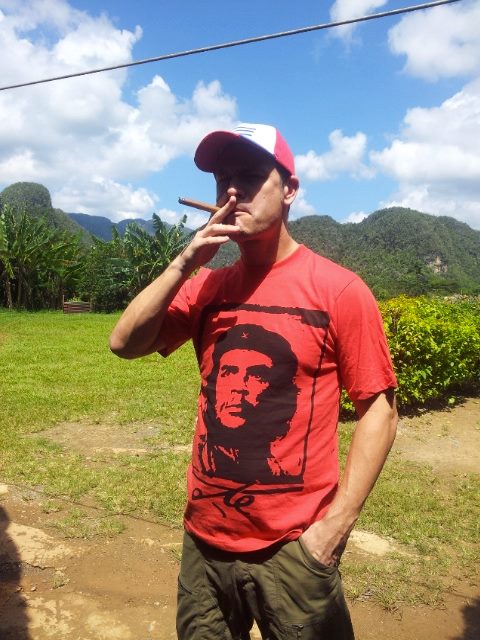
We arrived at the Melia Cohiba unscathed after our 40 minute backstreet tour. It was also quite a surprise. It is a beautiful modern hotel and conference center that would rival any four star Florida beach resort. We had a beer in the hotel bar and went our separate ways after checking in.  After unpacking, I put on a t shirt and changed into my jeans. I went downstairs and had another beer. I purchased a few Cuban cigars ( banned in the US), my very first. I lit up and then took a walk through one of the nearby neighborhoods where there was some kind of street party going on. Between the lack of street lights and the music I was able to anonymously blend into the scenery. I sat on a railing, smoking my fine cigar watching a group of 50-60 people having a marvelous time singing and dancing in the street to the music of a few guitars and drums.

The lyrics from a 70s song “Year of the Cat” came to mind

On a morning from a Bogart movie
In a country where they turn back time
You go strolling through the crowd like Peter Lorre
Contemplating a crime

When I got back to the hotel, I asked the doorman what exactly was the reason for the street party down the block. He had a wide grin with one gold tooth. “Oh that’s easy my friend, Its Monday. You know it only comes once every seven days”.

I am 100 miles from Key West, Florida but I am definitely in a foreign country- in a different era.  This place has not arrived into new millennium-and that is not a bad thing.

So this is Cuba. I am starting to really like this country.

BMJ Spotlight Interview: DevelopingEM

Interview by Ryan Radecki – Associate Professor of Emergency Medicine The University of Texas Medical School at Houston. 

This article was originally published on the BMJ website. It has been republished with their permission.

Today, we virtually interview Lee Fineberg and Mark Newcombe, the hearts and brains behind DevelopingEM.  They are emergency physicians who have returned from Havana, Cuba, after the second edition of their conference concept providing resources and support to medical education in the developing world.

Tell us a little bit about visiting Cuba, a place that’s traditionally been closed off to many in the Western world.

Mark: Cuba is an absolutely fascinating country. A combination of Madrid and Moscow in the middle of the Caribbean.
Crumbling colonial buildings, 1950s American cars, revolutionary murals, rum and cigars, with an integrated multicultural population which makes Cuba an incredibly romantic place to visit.

Lee: Yes its certainly an amazing place. Scenically incredible as Mark says but also culturally impressive. With a rich history and a revolutionary ideology that continues to infuse through peoples’ values, it is a welcoming, fair and safe place for visitors. We were both certainly made to feel welcome by both medical and non medical Cubanos.

What challenges did you witness in the delivery of medical care in Cuba?

Mark: As you probably know Cuba has a healthcare system that provides its citizens with healthcare indices equivalent to the United States. This healthcare is free for all Cubanos and is achieved despite a 50 year old economic embargo that prevents delivery of advanced pharmaceuticals and medical devices to Cuba.  We have called upon President Obama in an open letter to end this embargo, an immoral policy whose stated goal is to “bring about hunger, desperation and the overthrow of government”.

Lee: Yes, Cuba despite having limited economic resources has made health care a priority and as Mark has said despite spending 1/25 the spending per capita of the USA on health Cuba has approximately the same figues regarding overall life expectancy, as well as infant and maternal mortality. Cuba also has an impressive and largely unheralded program of international medical education, through the Latin American School Of Medicine(ELAM), and international medical aid. ELAM has been described as the largest medical school in the world with approximately 15,000 students from 50 countries. Cuba’s medical internationalism currently also sees 20,000 doctors working in multiple countries around the world.

Mark: So whilst there are challenges Cuba has an impressive national and international healthcare system that has many lessons for our own systems.

How is emergency care supported – or neglected – in their healthcare system?

Lee: Cuba has a different model of critical care delivery than the Anglo-American model we are used to. The core of the health care system in Cuba has revolved around the community based polyclinic with more advanced investigation and management occurring in specialty based hospitals. Critical care has been delivered primarily from an intensive care setting.

Mark: Yes emergency departments have increasingly become integrated into both the polyclinic and hospital setting with the realization that unwell patients can present to either setting. The bulk of critical care continues however to be centred in the intensive care. Whilst a different system it works well within the Cuban setting.

Many folks may not have heard enough about DevelopingEM. In a nutshell, what’s your core mission?

Lee: DevelopingEM is a new direction in medical education, combining cutting edge training in critical care medicine, with a focus on providing a meaningful contribution to medical professionals in developing regions through an inclusive and philanthropic approach.

Mark: We’re a not-for-profit conference organising agency specialising in providing a practical clinical approach to the delivery of emergency medicine and critical care education to senior practitioners in the fields of emergency medicine, intensive and critical care medicine, anaesthetics, and prehospital and retrieval medicine.

Lee: With short sharp, polished presentations focusing on evidence based best practice we hope to provide a clinically relevant educational experience aimed at the senior critical care practitioner.

Mark: Yes in fact this year we’re looking at 20 minute, 20 slide presentations, more audience participation, panel discussions and demonstrative scenarios.

Lee: As with the past two conferences in Sydney andHavana the core topics will include adult critical care medicine, pediatric critical care medicine, and trauma medicine, with optional sessions covering the Brazilian experience of emergency medicine, global health and emergency medicine, prehospital medicine and ultrasonography.

Mark: As well as the education provided during the conference we also aim to follow up on our efforts in Cuba and the Caribbean by hosting satellite workshops in the region and also donating computer workstations preloaded withFOAMed resources to centres in the region

Lee: Yes in 2013 we hosted an ultrasound course in St Lucia performed by the Ultrasound Podcast guys, and also an ATLS course in the Bahamas.

Mark: And we provided 4 Mac mini based computer workstations for health centres in the region. These were preloaded with EM courses and resources. We’re hoping to repeat the effort in Brazil.

Lee: As Mark mentioned earlier central to the philosophy of our concept is the not for profit model. We have avoided industry sponsorship in order to prevent content conflict of interest.

Mark: Yes conference registration fees and donations alone will be used to fund the ongoing costs of the annual conference and utilised to subsidise the attendance of regional delegates, the establishment of future conferences, and ongoing continuing education projects.

Lee: This model has been a successful financial model for the last two conferences with costs covered and enough credit to cover start up costs of the subsequent conference.

Mark: Our annual conference this year will be held in Salvador da Bahia, Brazil between September 8th and 12th and as with our model in Cuba, DevelopingEM is forging ties with local Brazilian critical care specialists and organizations in order to secure Brazilian involvement in both attending and presenting at the conference.

Lee: As well as Central America and the Caribbean, and South America, DevelopingEM hopes to take its educational concept to Sub Saharan Africa and South East Asia. Possible conference settings to follow Salvador include Gaborone in Botswana and Siem Reap in Cambodia.

What inspired you to initiate this program?

Lee: Primarily the inspiration grew from a desire for us to share in the experiences of our colleagues working in under resourced regions around the globe.

Mark: Yes we’ve met some truly inspiring people doing incredible work around the world. Unfortunately they often have a very limited ability to attend international meetings and interact with multi national critical care colleagues.

Lee: So I guess within a conference format we hoped to introduce our delegates and faculty to amazing clinicians from developing regions so that we can learn from each other.

Mark: And I think in Cuba we really were able to achieve this goal, and hopefully we’ll be able to repeat the process in Brazil.

How can interested folks support the initiative or become involved?

Mark: Registrations are the key for DevelopingEM. Without our delegates the whole concept doesn’t work. So we’d encourage everyone to take a look at the evolving program on our website and if it appeals join us in Salvador.

Lee: They can find us online, on Facebook, on Twitter, and on Instagram and spread the word to their colleagues. Not only will we be advertising the conference through these sources but also hosting an educational blog based around the presentations from Havana.

Mark: Even if your readers can’t make it to Brazil there will be options for virtual registration and delegate sponsorship to allow anyone to contribute.

A Skeptics Guide to Medical Literature- Podcast

Article by Dr Judi Galea

Welcome to DevelopingEM and our new blog!

DevelopingEM is an independent, not for profit organisation which aims to provide an innovative conference experience for senior critical care clinicians.

Guided by Dr’s Lee Fineberg and Mark Newcombe; two Emergency Physicians based in Australia; our focus is to improve medical education for experienced clinicians who are looking to share ideas, refine their practical skills and explore new technologies.

We aim to collaborate globally, sharing our knowledge with resource poor countries who are striving to progress Emergency Medicine as a speciality.

We have no pharmaceutical or medical sponsorship which gives us the freedom and flexibility to tailor content according to the needs of our delegates.

We like to use interactive workshops, simulation, discussion groups and excursions to encourage both an immersive and enjoyable experience.

To date we have hosted two conferences; in Sydney Australia and Havana Cuba.

The success of these has been overwhelmingly positive, both in terms of the feedback from our attendees and through our ability to sponsor resource poor delegates to attend.

These are designed to be ‘conferences with a conscience,’ and we have another one to look forward to this year, in Salvador da Bahia, Brazil from 8-12th September.

To extend our reach further, we will be distributing a range of audio and video podcasts on a weekly basis through this blog.

We aim to share presentations and discussions from our conferences, research of interest and integrate these with the wealth of resources available from our valued supporters, such as ‘Life in the Fast Lane’, and the Intensive Care Network.

And on that note, I’d like to introduce the first audio podcast from the Havana conference. This is ‘A Skeptics Guide to Medical Literature’ presented by Dr Joe Lex.

Dr Joe Lex has been working in Emergency Medicine for over 40 years. He is passionate about medical education for which he has been awarded many accolades.

He has his own website which hosts literally thousands of free talks, many of which have been recorded from national and international conferences.

Please check this website out on: http://freeemergencytalks.net/.

He has also produced his own podcast with these talks which is available for free from itunes and is named POTW.

In this talk, Joe encourages us to embrace new technologies, such as twitter and crowd sourcing to engage us in new research, and to become actively involved in peer review through this means.

And he introduces and explains to us some very important concepts that we all need to be very aware of when interpreting the medical research we read.

You can find the more complete transcript that accompanies the talk here.

Download PowerPoint Presentation

Achievements from Developing EM 2013

Dear Delegates of DevelopingEM 2013 and Supporters of DevelopingEM,

We’d  like to welcome you to our new website and introduce you to our blog. 

We’re aiming to release a post per week and will release all the presentations from Havana with comments and updates right here.

For our first post we’d just like to share with you some of the achievements that you helped obtain in Havana with DevelopingEM 2013.

Sponsored Delegates 

Proceeds from your registration allowed for the attendance of 63 regional delegates.

These delegates came from Havana, from all over regional Cuba and from St Lucia in the Windward Islands of the Eastern Caribbean.

This sponsorship gave these delegates the opportunity to attend the conference and participate in the specialised workshops.

Not only were we all able to sponsor their attendance but also some of their transport and accommodation costs were covered by your registration.

Equipment 

Proceeds from registration helped us to purchase 3 computer workstations for Cuba and another for St. Lucia.

Each workstation included a 32inch HDTV monitor, wireless keyboard and mouse, and a 500Gb Mac-Mini CPU pre-loaded with ACEM’s curriculum for a Diploma in EM (as developed by our own John Mackenzie) as well as hundreds of hours of audio and video lectures, podcasts, and presentations.

Thanks again to Joe Lex and everyone else who contributed to our library.

Data storage 

Proceeds from registration also allowed DevelopingEM to purchase and distribute over eighty 8-32Gb USB thumb drives to our Cuban and Caribbean colleagues.

These devices, which are near to impossible to acquire in Cuba, were used by many of our colleagues to download textbooks and video files from the workstations during the conference.

Medical Equipment 

Two EZIO kits were also donated to the region.

Training 

In addition to the Havana plenary sessions our faculty were busy providing much needed training for the region.

Matt and Mike from Ultrasound Podcast fame received enthusiastic accolades for the ultrasound workshop they ran in Castries, St. Lucia.

Meanwhile Ricardo Hamilton and Mary Langcake organized and ran the first fully accredited ATLS course in the Bahamas in the week after DevelopingEM 2013.

Sponsorship 

As you know there was opportunity during registration to individually specifically sponsor the registration of delegates, provide funds for donated equipment and also to generally donate funds to our not for profit organization.

Funds of this type contributed to nearly 5 percent of our total income and greatly helped us achieve our aims.

Presenters 

Our amazing faculty supplied their time and energy to provide all of us with an amazing educational experience.

Without exception they understood the ethos of DevelopingEM and as a result presenter assistance required was minimal at around 0.5% of our total expense incurred.

Here’s what some of your Caribbean colleagues had to say about the conference.

From Dr. Lisa Charles in Castries, St. Lucia 

The DevelopingEM 2013 Conference with a Conscience was most certainly a conference with a difference.

As the Medical Director at the public hospital on a small island in the Caribbean, it has been difficult to find a conference which not only offers alternative practice guidelines for resource strapped environments, but where the attendees are interested in finding solutions to the challenges of Emergency Medicine in Developing Countries.

The conference environment was both receptive and responsive to the challenges faced in practicing emergency medicine in the developing world.

The contacts I made felt more like allegiances in the battle to better emergency medicine in areas where the battle is often fought with gauze bandages and wooden splints.

This is spectacular given the rewards of these allegiances are not published papers and breakthroughs in medicine but a day by day bettering of the very basic needs of patients.

I am indebted to Lee and Mark for inviting St. Lucia to this conference and sponsoring our delegation.

Equally their assistance in getting our bedside ultrasound project off the ground by facilitating the visit of instructors Mark and Mike from Ultrasound Podcast to St. Lucia will go an incredibly long way at our hospital where the radiology services are an x-ray machine and the ultrasound services of a single radiologist from 9 am to 12 noon.

Thanks guys and see you next year in Brazil!

Dr. Lisa Charles Consultant Emergency Medicine, Medical Director Victoria Hospital.

From Dra. Belkys Rodriguez in Cienfuegos Dear Colleagues Mark and Lee:

You are very friendly persons, and very professional, the conference was excellent and that time will be unforgettable for me and my colleagues. I think we will never forget the excellent conference that you organized, the meal in the plaza, beautiful place, full of good persons talking, for me like a dream, and the other social activities.

Many thanks for all. I expect that some day we could meet again. You know that in Cuba you have many friends now. I will never forget those days and you. Abrazos,

Belkys

From Dra Jenny Sanchez Fernandez in Havana

Hello Lee & Mark: Sorry I have not written to you before. I was very busy because I started a course on Abdominal Ultrasound and I´m learning a great deal. I was so interested when you had the workshop on Ultrasound at the Conference in Havana and I discovered that it is an important tool in the hands of an Emergency or ICU doctor. So, when the conference finished I started to made some plans and finally I started the course in Ultrasound. I´m very happy with it.

It was a great experience for me to meet all of you.

Of course I wish to see you again and it will be a fantastic dream to work with you and your colleagues one day.

Kisses and regards for you. Jenny

You may also recall the questionnaire regarding the US embargo that was circulated during the conference. The following letter to President Obama was drafted as a result of your replies.

This letter also received prominent mention in the BMJ article  written by Jeanne Lenzer. So many thanks once again to everyone who supported DevelopingEM Havana. Without you none of this would have been possible. We are busy planning DevelopingEM 2014 which will be held in Salvador da Bahia, Brazil from September 8th to 12th.

We hope you can join us and your Brazilian colleagues in this fascinating city.

Once again thankyou for your support and all the best for 2014 from the entire DevelopingEM family.

Kind Regards, Lee and Mark

BMJ on DevEM Letter to President Obama bmj.f6537 (1)

President Barack Obama (signed)