What your Registration means

DevelopingEM has a different model to most conferences.

Right from the start we wanted to donate our time and energy to something valuable and as a result neither Sanj nor myself or indeed anyone in the medical organising committee receives a single one of your dollars.

Right from the start we wanted to make sure that the neither the medical device nor pharmaceutical industries were involved in DevelopingEM and we receive no income from this sector and we do not have a trade exhibit.

Right from the start we wanted to bring a high level educational experience to a part of the world where emergency medicine was developing and sponsor the attendance of host country and regional attendees.

As a High Income Delegate it is your registration charge that allows DevelopingEM to occur and allow us to achieve the aim of inviting and supporting the attendance of as many local and regional delegates as possible.

Your registration charge makes up 95% of our income so without you this whole thing just doesnt work.

To date our model has allowed the supported attendance of over 800 delegates since our first international event in 2013 and we hope to get close to 1000 overall by the time we conclude DevelopingEM 2026.

We are working closely with the Saint Lucian Ministry of Health to identify suitable sponsored delegates from the host nation and we hope to provide complimentary registration to over 100 local clinicians over the span of the conference.

We are also working with the Organisation of Eastern Caribbean States as well as with pre-existing Caribbean connections to identify delegates from the region that will benefit from not only complimentary registration but also travel and accommodation assistance to attend DevEM2026. We hope to support at least 10 (and hopefully 20) clinicians from the region to attend in this way.

This is all down to you.

The more registrations we have the more local clinicians can attend.

Its really that simple.

So why dont you join us and the DevelopingEM community this year, not only for some great education but to do something good.

Where is Saint Lucia and how do I get there?

If you’ve registered (or are thinking about registering) for DevelopingEM 2026, one of the first questions that naturally comes up is:

Where exactly is Saint Lucia — and how do I get there?

The short answer: it’s easier than many people expect.

WHERE IS SAINT LUCIA?

Saint Lucia is an island nation in the Eastern Caribbean, part of the Lesser Antilles. It sits between Martinique to the north and Saint Vincent and the Grenadines to the south, and is well connected to North America, Europe, and other Caribbean hubs.

The island is known for its dramatic volcanic landscape (including the iconic Pitons), warm climate, and a well-developed tourism infrastructure — one of the reasons it works so well as a conference destination.

English is the official language, the local currency is the Eastern Caribbean Dollar (XCD), and US dollars are widely accepted.

WHICH AIRPORT DO I FLY INTO?

Most international travellers will arrive via Hewanorra International Airport (UVF), located on the southern part of the island.

Hewanorra is Saint Lucia’s main international airport and the primary gateway for long-haul flights.

HOW BUSY IS HEWANORRA INTERNATIONAL AIRPORT?

Hewanorra is a well-established international airport with multiple daily international arrivals, particularly during the peak travel season (which includes November).

On an average day, the airport handles:
• Several wide-body long-haul flights from North America and Europe
• Multiple regional Caribbean connections
• A steady flow of arrivals timed to allow same-day onward travel across the island

Despite being a smaller airport than major global hubs, Hewanorra is designed for international traffic and processes arrivals efficiently.

WHERE CAN I FLY FROM?

Direct flights to Saint Lucia are available from several major hubs, including:

• United States: New York, Miami, Atlanta, Charlotte, Chicago, Newark and other seasonal routes
• Canada: Toronto and seasonal connections
• United Kingdom: London (direct long-haul flights)
• Europe: Via London or regional European connections
• Caribbean: Easy connections through Barbados, Antigua, Puerto Rico and other regional hubs

For many travellers, Saint Lucia is either a direct flight or a single-connection journey.

WHAT HAPPENS WHEN I ARRIVE?


Arrival at Hewanorra is straightforward:
• Immigration and customs are efficient and familiar with conference and tourism traffic
• Taxis, transfers and pre-arranged shuttles are readily available
• Travel to Castries and the Royalton conference venue typically takes 60–90 minutes

IS IT COMPLICATED TO GET THERE?

In short: no.

Saint Lucia is one of the more accessible Caribbean islands for international travel. Flights are regular, the airport is experienced with international arrivals, and ground transport is reliable.

A FINAL WORD ON PLANNING

If you’re attending DevelopingEM 2026, early planning helps:
• Flights are generally more affordable when booked earlier
Accommodation options are broader
• Arrival logistics are easier to coordinate

Saint Lucia may look exotic on the map, but in practice it’s a well-connected, conference-ready destination.

We look forward to seeing you there Nov 14-18, 2026 for DevelopingEM 2026.

#DevEM2026 @developingem http://www.developingem.com

Registration is Open! Start Planning Your DevelopingEM 2026 Journey Now.

Registration for DevelopingEM 2026 is officially open, marking the beginning of a new chapter for our global EM community.

With the event website now live, clinicians can explore the full conference outline, register for workshops, and begin planning travel to Saint Lucia.

Early Bird registration is available until 1 February 2026, offering reduced rates and greater flexibility for planning leave and logistics.

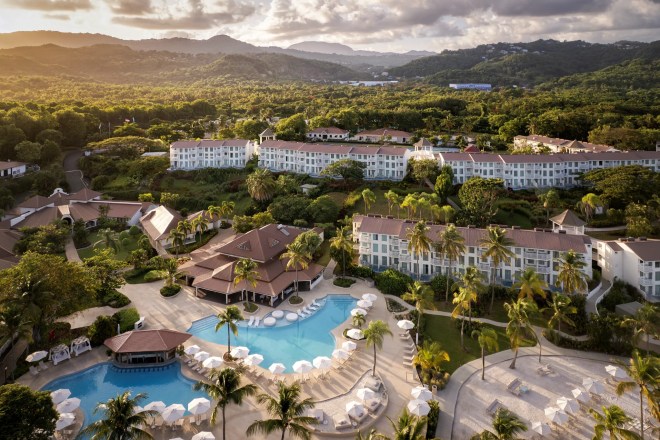
A common concern for Caribbean conferences is accommodation cost. Many resorts, including our venue the Royalton Saint Lucia, operate on an all‑inclusive model. While the nightly rate may appear high initially, it includes meals, drinks, amenities, taxes and service charges. When these inclusions are considered, the overall value becomes clear.

DevelopingEM has secured a room block at the Royalton, while Castries and surrounding areas also offer accommodation options across all budgets, including boutique hotels and BnBs.

DevelopingEM 2026 Saint Lucia is going to be a landmark event so get your registration and accommodation locked in early.

We look forward to seeing you in November 2026!

Look Who’s Back!!

DevelopingEM 2026 is confirmed for November 14-18, 2026 in beautiful Saint Lucia in the Caribbean.

Why Saint Lucia I hear you ask?!

Well because we have friends and colleagues there who have been trying to get DevelopingEM back to the region for years.

The wonderful Lisa Charles suggested a collaboration years ago and we are enormously grateful for her persistence and patience in finally getting DEM to Saint Lucia.

Lisa has presented on the development of emergency and critical care in Saint Lucia at 3 of our previous events and has helped coordinate, with DevelopingEM faculty, a range of teaching and system strengthening activities in Saint Lucia over the last decade.

With her support, DevelopingEM now has the support of the Saint Lucia Chief Medical Officer, the Saint Lucia Ministry of Health, and the Organisation of Eastern Caribbean States to collaboratively organise another regional event where local and neighbouring clinicians share experiences and solutions with delegates from around the globe.

The conference returns with our proven plenary format and with a range of high-quality workshops over a 5 day period.

We hope those who already know us are pencilling the schedule into their diaries but for those of you who haven’t experienced a DEM lets reintroduce the concept.

DevelopingEM is a little venture Sanj Fernando, Lee Fineberg and myself started in 2011 and DevelopingEM 2026 will be our ninth event.

DevelopingEM Ltd is a not for profit venture with a unique financial model.

On average greater than 90 percent of our funding comes from the registration fees of attendees from privileged situations, often where there is individual access to substantial study leave funding.

This funding not only pays for the organisational aspects of each event but, with careful budgeting, it allows funding to be directed towards subsidising the attendance of clinicians from host nations and regions. In 2026 we are aiming to support the attendance of 60-70 St Lucian and regional Caribbean clinicians.

The absence of a requirement for medical industry funding gives us organisational independence and there is no influence from industry bodies on our ethos and direction.

We aim to hold a regular regional conference in a situation where emergency medicine is rapidly evolving.

The educational approach is centred on the provision of excellent clinical information aimed at the senior clinician allowing all attendees to take home clinical pearls to their next clinical shift.

The core conference has tracks focussing on Adult Emergency Medicine and Critical Care, Paediatric Emergency Medicine and Trauma Care.

These core tracks are teamed with sessions focussing on the development of emergency medicine globally as well as sessions determined by the host partners.

Alfred Health is our event management team.

The Alfred Emergency and Trauma Centre from Melbourne runs our trauma track, Stonybrook Health from New York organises the Adult Emergency Medicine track and McMaster Sick Kids in Ontario our Paediatric track.

Along with our plenary sessions we will be collaboratively running a range of workshops including

  • Advanced Ultrasound
  • Paeds BASIC
  • ECG Interpretation
  • Radiology Intepretation
  • EMS Management
  • Emergency Nursing

DevelopingEM 2026 will be our ninth event with previous events in Sydney, Cuba (twice), Brazil, Sri Lanka, Fiji,  Colombia and Darwin.

Over that time we have sponsored the attendance of over 700 regional clinicians who, depending on the setting, have paid anything from zero to ten percent of the registration fees of an international delegate. Regional delegates have also received accommodation and travel assistance.

The last 4 conferences have seen this delegate support become a much more organised venture with local and regional delegates not only mostly funded from a registration point of view but also receiving accommodation and travel assistance.

We remain very proud of this aspect of DevelopingEM.

One of the other achievements, which was less anticipated, were the longer-term effects of a broad range of clinicians coming together.

The opportunity that the events have provided for like-minded people to meet has resulted in lasting relationships that have resulted in long standing benefits across the regions where the conferences have been held.

Some examples include recurrent paediatric, ultrasound and trauma workshops across the Caribbean, increased connectivity between regional clinicians with mentors and educators in Australia and the USA, and ongoing mentoring of prehospital practitioners in Sri Lanka.

The benefits have certainly not been unidirectional, and we have been taught much by our regional colleagues.

Perhaps the most acute lesson is just how lucky we are here in Australia.

In Australia we are monumentally privileged in global terms to have the health care systems and working conditions that we enjoy.

Despite having a luxurious health care system, the explanation of the benefits of different systems from around the globe demonstrates that we also have much to learn about how to maximise the benefit of an emergency medicine system.

We have learnt how the Cuban system achieves the same health outcomes as Australia at one eighth of the cost.

We have seen how developing an emergency system from the ground up in Sri Lanka allows that system to focus on patients with actual emergencies.

Just because we have it good doesn’t mean we can’t learn to be better, to be efficient and to be more focussed.

We have also been taught what it is actually like being an emergency clinician in a different system.

Emergency clinicians from around the globe have explained how they battle trauma, disease and illness in working conditions we can barely fathom, with enthusiasm and without complaint.

These experiential presentations have been a core of our conferences and it has been an absolute privilege to learn from wonderful clinicians from around the world.

Sanj, I and the entire team are really excited about the possibilities DevelopingEM 2026 St Lucia will hopefully bring.

We are also very enthused at the prospect of seeing you, our DevelopingEM family, again next year in Saint Lucia.

Come and join us for the best emergency and critical care conference of 2026.

See you in Saint Lucia!

DevelopingEM heads to Saint Lucia

G’Day DevelopingEMers!

We’re thrilled to announce that our 9th DevelopingEM Conference will be held on the stunning Caribbean island of Saint Lucia — in partnership with the Saint Lucia Ministry of Health.

Get ready for a week of world-class education, collaboration, and island magic.

Long standing DevelopingEM Faculty member Lisa Charles from Saint Lucia will be our co-director for this event.

All the Best Bits of DevelopingEM Return

This year’s event brings back everything you love about DevelopingEM — and more.

Confirmed Workshops

  • Advanced Ultrasound with the Alfred Health team
  • Paeds BASIC (ICU level workshop)
  • Emergency Nursing Workshop with Prof. Kate Curtis
  • Advanced Radiology Interpretation
  • ECG Interpretation Workshop
  • Prehospital Management Workshop

Confirmed Plenary Tracks

  • Paediatric EM & Critical Care – April Kam and the McMaster team
  • Adult EM & Critical Care – Brian Wright and Stony Brook team
  • Trauma Care – Peter Cameron and the Alfred team
  • International EM – Nat Thurtle
  • EM in Saint Lucia and the Caribbean

Local Collaboration & Support

Local and regional faculty will join forces with our global experts, ensuring every session reflects the unique challenges and opportunities of Caribbean emergency care.

As always, your delegate contributions will help support attendance for St Lucian and regional participants, strengthening emergency medicine across the region.

And of course, Saint Lucia,

Because no DevelopingEM conference is complete without a bit of island fun.

Expect spectacular beaches, Creole cuisine, Piton sunsets, and the signature DEM social events you know and love.

So, pack your scrubs and your swimsuit — and join the DevelopingEM family once again in Saint Lucia.

See you there!


Mark and Sanj

DevelopingEM supports the Voice to Parliament

Later this year a compulsory national vote on a question about a proposed change to the Australian Constitution, a referendum, will be held to decide upon the establishment of an Aboriginal and Torres Strait Islander Voice to Parliament. Importantly these new changes will formally recognise Aboriginal and Torres Strait Islander peoples as the First Peoples of Australia.


A new Chapter (IX) and Section (129) will be inserted into the constitution as follows

Chapter IX- Recognition of Aboriginal and Torres Strait Islander Peoples

Section 29 Aboriginal and Torres Strait Islander VoiceIn recognition of Aboriginal and Torres Strait Islander peoples as the First Peoples of Australia:

(i) there shall be a body, to be called the Aboriginal and Torres Strait Islander Voice

(ii) the Aboriginal and Torres Strait Islander Voice may make representations to the Parliament  and the Executive Government of the Commonwealth on matters relating to Aboriginal and Torres Strait Islander peoples

(iii) the Parliament shall, subject to this Constitution, have power to make laws with respect to matters relating to Aboriginal and Torres Strait Islander Voice, including its composition, functions, powers and procedures.


DevelopingEM supports the position statement of the Australasian College for Emergency Medicine on the Voice to Parliament.

The Australasian College for Emergency Medicine (ACEM) supports a Voice to Parliament and Declaration of recognition in the Australian Constitution for Aboriginal and Torres Strait Islander people to help drive urgently needed changes and provide a clear and practical way forward for self-determination, as an essential step in the nation’s reconciliation journey.

DevelopingEM supports the Explanation of the referendum and the Voice to Parliament detailed by Reconciliation Australia.     

A Voice to Parliament will give Indigenous communities a route to help inform policy and legal decisions that impact their lives. Giving people a say will lead to more effective results.

This video from the Reconciliation Australia website provides an excellent summary of the value of the constitutional changes proposed and also addresses some of the common concerns with change.

DevelopingEM supports the Voice to Parliament

Thanks for your time and keep an eye on our social media for more resources related to the referendum.

Yours Sincerely,

Mark Newcombe and Sanj Fernando.Co-Directors of DevelopingEM Ltd.

DevelopingEM 2022 Wrap Up

Dear Colleagues, DevelopingEM Delegates and Faculty

Well, another DevelopingEM event has come and gone and we would just like to thank you for your enthusiastic support in making DEM2022 Darwin a conference to remember. We hope you agree that it was an amazing event and we hope the relationships made during the conference will continue to grow and develop in the years to come.

Our conference model does not work without your registrations as these, as you know, are our main funding source.

This model means you are all an integral part of the DevelopingEM team and responsible for the process.

We, as the management team, will be forever grateful for your support.

Despite the new challenges of the pandemic world and uncertainty about whether conferences of this nature would work, attendance was beyond our expectations.

  • 234 delegates attended in person with a further 61 online.
  • 26 of the 80 Faculty were of First Nations heritage with representation from Australian First Nations, Aotearoa and New Mexico.
  • 16 regional delegates from Timor Leste, Papua New Guinea, Fiji, Samoa, Nauru, Kiribati, Tonga and Vanuatu were supported to attend in person. This covered registration, flights and accommodation. This group was funded by The Pacific Community, The ACEM Foundation, Tac Med, ELS, EMRAP GO, St Vincent’s Pacific Development Fund, and also personal donations from Mark Herewini and Rob Mitchell.
  • 30 delegates from across the Pacific, Asia and Africa were supported to attend virtually and were funded by DevelopingEM.
  • 90% of income came from you, DevelopingEMers, with the remainder of funds coming from the above sponsors and a Northern Territory Government Business Events sponsorship grant for which we are most grateful.

The breakdown of the distribution of the delegate registration fees is as follows.For a full delegate paying $AUD1800:

  • $AUD 990 went towards venue and support service costs
  • $AUD 450 went to administrative costs including outsourced event management, insurance, legal requirements, and merchandise (there is no payment to the medical management team)
  • $AUD 126 went towards planning meetings
  • $AUD 90 went towards marketing
  • $AUD 36 went towards IT support

Normally 15-20% of our funding is directed towards host delegate and faculty support. This year this support was moved towards assisting our First Nations faculty with flight and accommodation support. In fact, the vast majority of this group generously self-funded or used existing institutional support and so only 6% of the total budget was required to support this endeavour. This equates to only $AUD108 from each full delegate.

Many ongoing relationships were forged during the conference and we hope this results in multiple future projects being generated as a result of the conference.

In summary, you have all achieved a great deal both in an immediate and long-term sense and the feedback from faculty and delegates has been overwhelming.

A comment from Paul Saunders, who led our second First Nations Healthcare afternoon, is very heart-warming and reflects many of the comments received from our amazing First Nations faculty.

“It was a fantastic conference, the best one I have been to, and I have been to plenty over the years. The real highlight for me was the inclusivity the coordinating team allowed in terms of First Nations faculty”.

We have reasons as a group to feel just a little proud of our collective achievements and once again we would like to thank you for your support.There are a few other things we need to mention before we let you get back to your busy lives.

Conference presentations
There were many requests for copies of the conference presentations. We hope to have all the presentations and videos uploaded to our website soon.

Staying in touch with other delegates
Without pre-approval, we can’t release our delegate details but if you are happy for us to make your contact details available for other delegates please let us know and we will create a 2022 detail database.Probably the easiest way to stay in touch would be through our Facebook and Twitter Pages. Feel free to join us here, upload your photos from the conference and post your thoughts. The instant messenger services on Facebook and Whatsapp are great ways to communicate as well.

Giving thanks
We would first like to thank our hosts and cultural ambassadors for the event Aleeta and Richie Fejo for helping us direct the event and for warmly welcoming us all to Larrakia country. We will remain forever grateful for the stewardship provided by Aleeta and Richie.

Our amazing unpaid faculty never ceases to amaze us with their generosity and expertise. With our old hands merging with new players, the workshops and plenary sessions were outstanding and we need to thank the following;

  • Naren Gunja and the Tox Team from TAPNA.
  • Terren Trott, Nadi Pandithage, Angelo Abeywickreme and the entire Core Ultrasound team.
  • Kate Curtis and the HIRAID Nursing team.
  • Aruna Shivam, Brian Wright and Ben Wyler for coordinating Adult EM, Peter Cameron, Jamie Moran and Dave McCreary for hosting Trauma, and April Kam and Sarah Watson for bringing us Paediatrics.
  • The afternoon First Nations Healthcare tracks brought us some of the best thematic discussions we have ever seen at DevelopingEM and the track leaders, Aleeta Fejo, Jacqui Hughes, Sarah Goddard, Paul Saunders, Sharon Bloxsome, Paul McLeod and Ryan Dashwood were extraordinarily generous in leading these sessions.
  • We would also like to thank Lee Wharerau for coordinating the team from Aotearoa, and Chelsea White for coming all the way from the Navajo Nation.
  • Our faculty support teams also were enormously helpful in planning and developing the entire program and this includes Andrew Bezzina, Amanda Wallis, Nathan Trist, Megan Cox, Michelle Withers, Nat Thurtle and Taryn Clark.

Thank you all and we hope to work again with you very soon.

Events like this take time and persistence to plan and prepare and without the help of our incredible Alfred Health staff including Ann-Maree Guirguis, Sarah Jones, Arjun Bhogal and James Cameron, these events just would not happen. Thank you for your hard work over the last year and especially during the conference.

Preparations for our next event are steadily coming into focus and Sanj and I hope to bring you an ever-improving format so that hopefully we can again get together with our DevelopingEM family.

Thank you from both of us for all your support over the years and we will have more information on our future plans soon.

Mark & Sanj

Support the Indigenous Literacy Foundation.


DevelopingEM is pleased to partner with the Indigenous Literacy Foundation.

The Indigenous Literacy Foundation is a national charity working with Aboriginal and Torres Strait Islander remote Communities across Australia.

They are Community-led, responding to requests from remote Communities for culturally relevant books, including early learning board books, resources, and programs to support Communities to create and publish their stories in languages of their choice.

We are hoping, with your help, to raise $2500 to support the Indigenous Literacy Foundation to provide books and learning resources to Indigenous children living in remote communities across Australia.

Show your support by clicking on the QR code, making a donation and sharing the page with your friends, family, colleagues and the DevelopingEM community!


Voices of the Future is a 3 minute video highlighting how your donation impacts the lives of children in remote Indigenous communities.

Look out for further ILF resources at our conference, DevelopingEM 2022 in Darwin from September 26th to 30th.


Have a listen to ‘Words Make The World Go Around’, by Josh Pyke & Justine Clarke written especially for the Indigenous Literacy Foundation.

Single available from: https://abcmusic.lnk.to/WordsMake

Proceeds support the Indigenous Literacy Foundation.

Get Connected at #DevEM2022

DevelopingEM conference a great way to connect with like-minded clinicians from around the globe.

We have some great social events this year but even on our other days and nights people will be getting together.

The best way to stay connected is by joining our Whatsapp group.

Once again Joachim Unger from Berlin is taking care of your social arrangements.

Joachim is our most loyal international delegate and he’s been to every one of our international events.

He even collects the wrist bands.

He’s also a consultant anaesthetist who works in emergency medicine, intensive care and anaesthesiology.

As if thats not enough he is also the medical director of the Berlin Fire Brigade and the director of Global EMS.

Coming from Berlin he also is an expert on having fun- you are in good hands.

Come to #DevEM2022 for great clinical pearls and thematic discussion on the challenges and opportunities in the delivery of healthcare for First Nations peoples but also make sure you enjoy yourself!

Connect today.

Ongoing DevelopingEM Assistance

In between conferences DevelopingEM continues to support international colleagues.

And by DevelopingEM we mean you, our family, our delegates, because it is your registration charges that go towards everything that your organisation does.

After #DevEM2020 we were able to facilitate the purchase and delivery of an iSimulate device to Laura Galvis in Cali, Colombia.

As many of you will remember Laura is a PEM specialist and gave a great presentation in Colombia on The How To’s of Using Low Fidelity In Situ Simulation in Paediatric EM.

It took a while to get the device to Cali because of the pandemic but it’s now in regular use.

We thank iSimulate and our colleague Camilo Gutierrez for facilitating your donation to Laura.

Dr Asanka Migelheva and staff from National Hospital Sri Lanka receive an Oxylog 3000 ventilator and associated equipment

Since our 2016 conference in Colombo, Sri Lanka, DevelopingEM has maintained a relationship with the Emergency Medicine community in Sri Lanka and played a role in the development of Emergency medicine and pre-Hospital services in the island nation. 

In 2021 DevelopingEM saved a bunch of medical equipment from being buried in an Australian landfill. With your support Sanj Fernando, our co-director, was able to recondition and transport a total of 12 ventilators and a heap of other medical equipment to Colombo.

This equipment is being distributed to large and small EDs around the country.

Some of the ventilators have in car chargers and are planned to be used to set up a critical care retrieval service between major population centers. This will hopefully facilitate the safe transfer of critically ill patients and aid in managing the demand in health services across the country.

At a tough time for Sri Lanka these devices have been gratefully received by your colleagues.

We thank you for your support as we continue to help colleagues in a small way around the globe.

Thank you DevelopingEMers!!